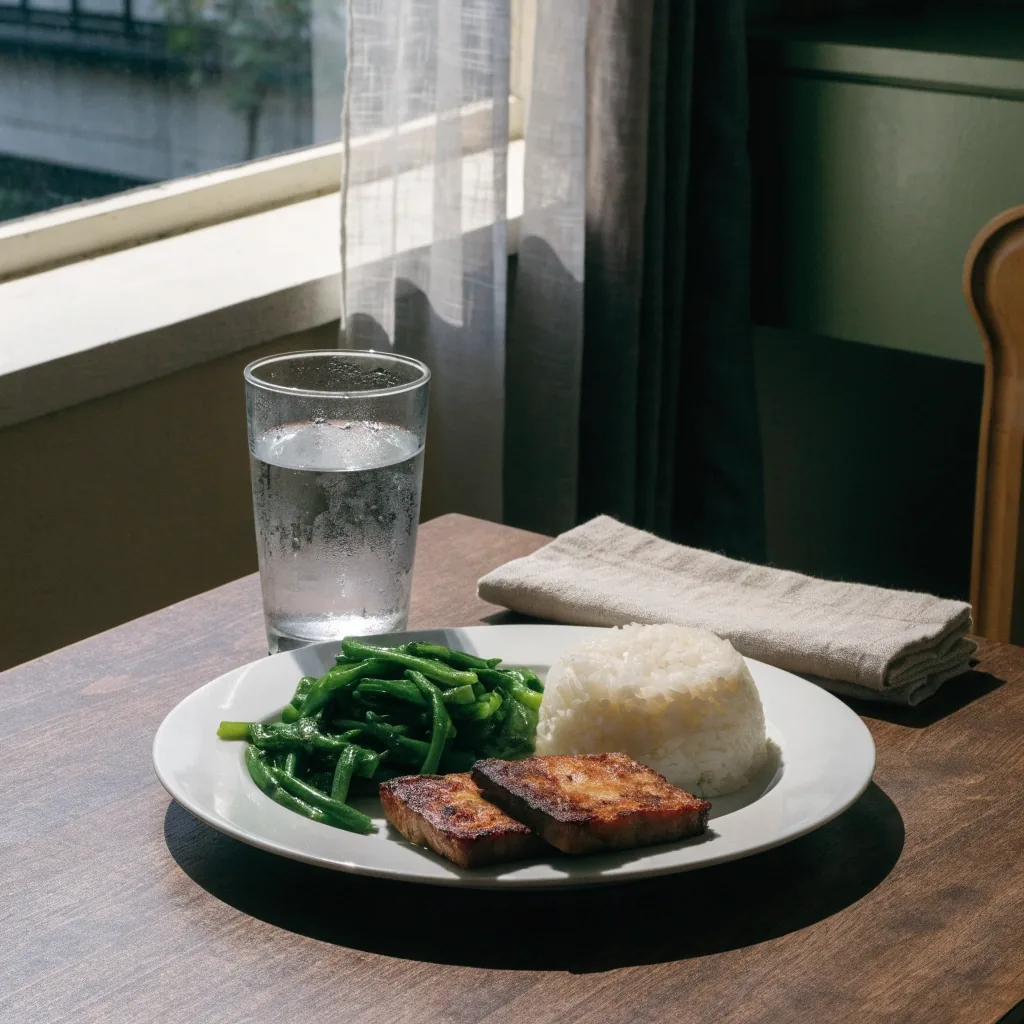
A home kitchen table in Yogyakarta set with rice, greens and tempeh under soft noon light

Meal planning guide

Building Balanced Meals With Indonesian Food

A meal plan only works if you can cook it on a Tuesday after work. This guide stacks the everyday building blocks of balanced eating from food you already buy: rice, tempeh, tofu, eggs, fish, chicken, kangkung, spinach, and seasonal fruit.

Start with the plate

Start with the plate, not the spreadsheet

Picture a plate split roughly in three: a staple such as rice or noodles, a protein, and vegetables, with fruit or a small portion of something richer on the side. That rough shape does more for most people than tracking grams.

Rice is not the enemy; the portion and what sits next to it matter more. Adjust the proportions to your goal and your hunger, then keep the same shape tomorrow so the habit has somewhere to land.

If you are preparing for a konsultasi gizi session, photograph two or three ordinary plates before the appointment. Real meals give your dietitian far more to work with than a remembered average.

The rough thirds

  • Staple Rice, noodles, potato — sized to your hunger
  • Protein Tempeh, tofu, egg, fish, chicken
  • Vegetables Kangkung, spinach, long beans, cabbage
  • On the side Fruit, or a small portion of something richer

Use the shape, not a gram count. Your dietitian can set amounts once they know your size, work and training load.

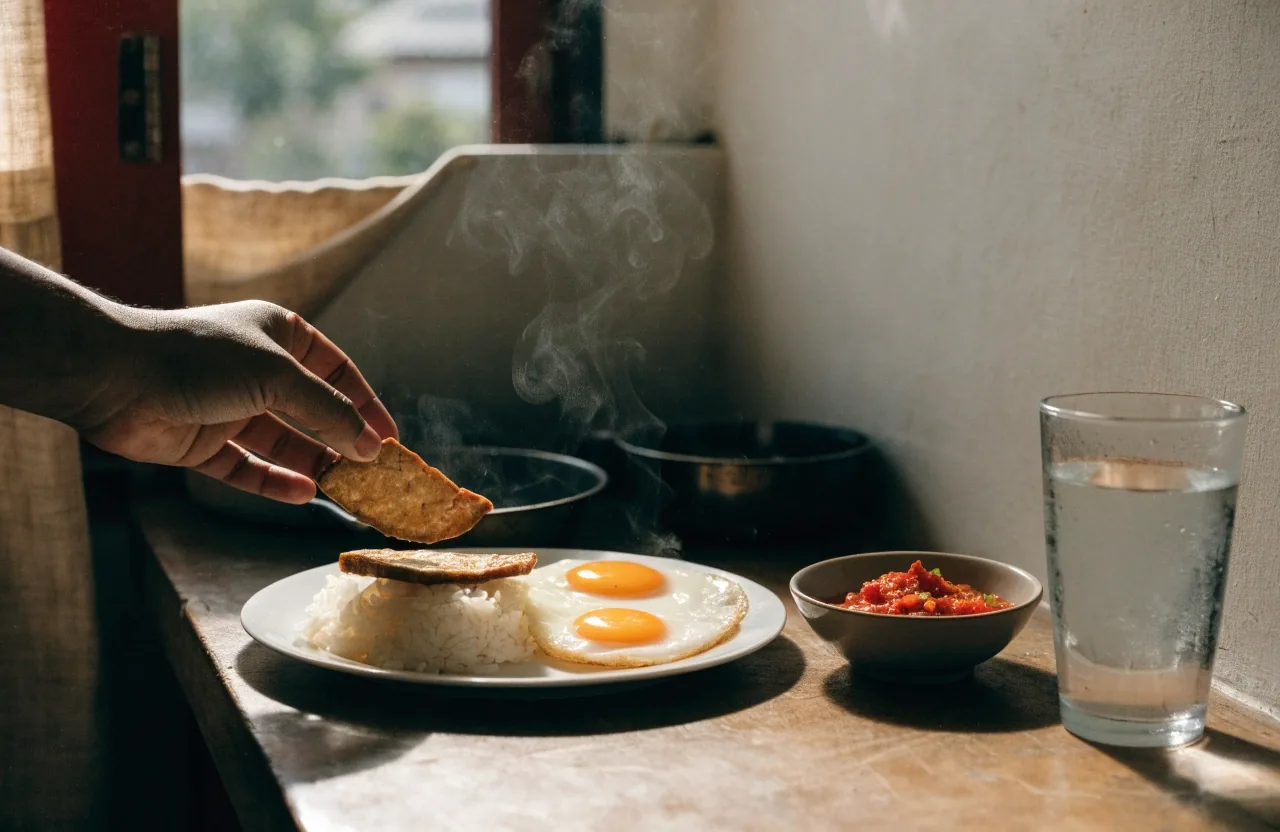
Two eggs and sliced tempeh plated beside rice on a stone counter in morning light

Protein at breakfast changes the day

Most Indonesian breakfasts lean on carbohydrate: rice, bread, or noodles with little protein. Adding eggs, tempeh, tofu, or leftover fish at breakfast tends to reduce mid-morning snacking.

It does not need to be elaborate. Two eggs and a piece of tempeh alongside your usual rice is a real change. If you eat nasi uduk on the way to work, add a boiled egg from the same warung rather than rebuilding the morning. Your dietitian can adjust the amount to your body size and activity.

Vegetables and fruit without the lecture

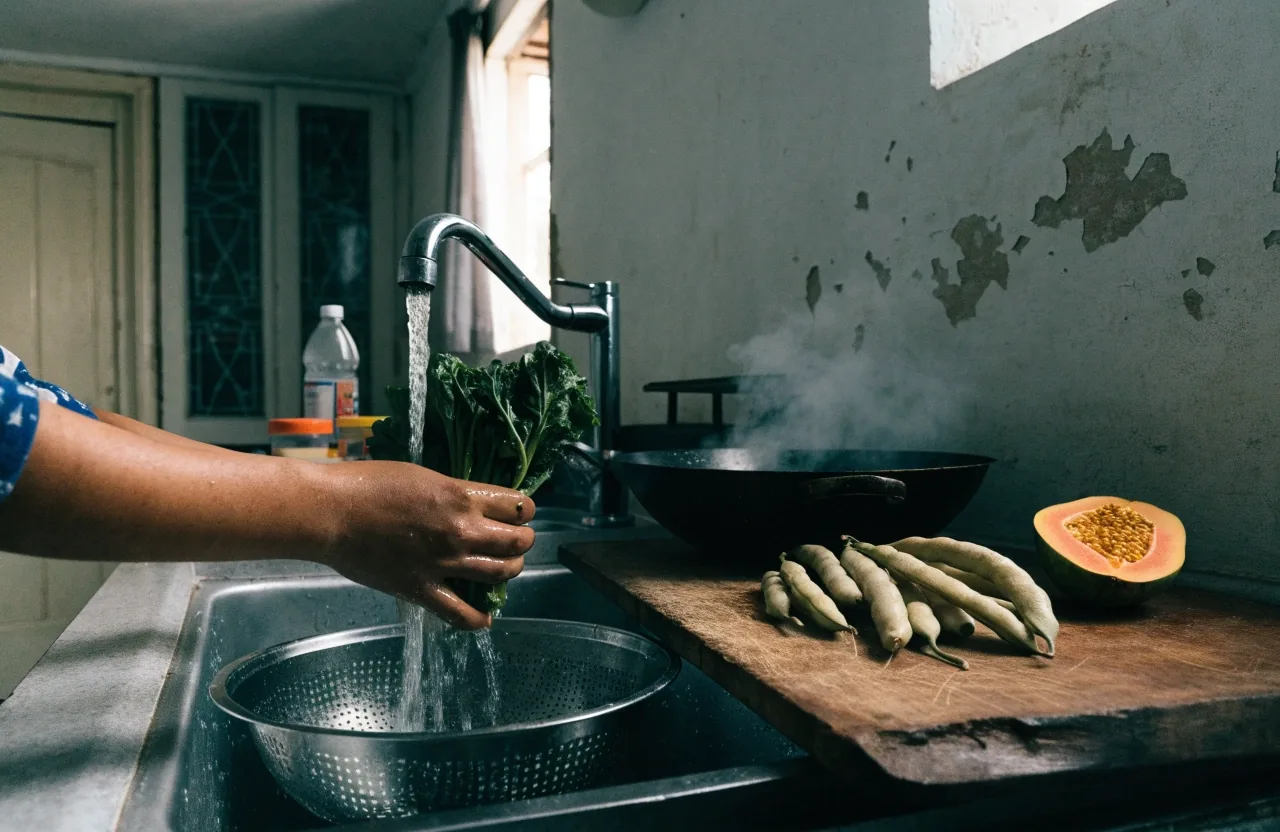
Kangkung, spinach, long beans, and cabbage are affordable and quick to cook. Aim for vegetables at two meals rather than a perfect plate at every one. A bunch of kangkung tucked beside rice costs little and takes minutes in a hot pan.

Fruit works well as a snack, especially papaya, guava, orange, and banana, which are available year-round and easy to carry. If vegetables at breakfast feel strange, start with lunch and dinner and leave the morning alone for now.

Bundles of water spinach and long beans beside papaya and banana at a market table

Cooking method and hidden additions

How a dish is cooked often matters as much as what is in it. Coconut milk, frying oil, and palm sugar in drinks add up quickly without being visible on the plate.

We do not ask you to abandon rendang or sambal. We look at how often, how much, and what else the day contains. Small, consistent adjustments hold better than a strict week that ends in a binge — and they survive a busy Thursday.

Checks worth keeping

  • Grilled or steamed protein instead of fried, most days.
  • Coconut-milk dishes a few times a week, not twice a day.
  • Sweet drinks counted as food, not as a drink alongside food.

Snacks, sweet drinks, warung habits, and water

Four ordinary places where small decisions add up. None of them require a different kitchen or a different budget.

Sweet iced drinks

Sweet iced drinks are one of the most common places calories arrive unnoticed during a hot day. A single daily sweet drink is worth examining before you change anything else.

First

Warung lunches

Warung lunches can be balanced by choosing grilled over fried protein and adding vegetables where the stall offers them. Build the plan around your real lunch options, not an idealized kitchen.

Often

Afternoon snacks

Afternoon snacking usually follows a breakfast without protein. Fix the morning first and the snack often settles on its own. Fruit, boiled egg, or a small handful of peanuts are easy to keep nearby.

Watch

Hydration in a tropical climate

Water needs rise with heat and activity, and most people undereat fluids without realizing it. Plain water, unsweetened tea, and water with lime all count. Sports drinks have a place during long or intense sessions, less so on an ordinary office day. Your dietitian can set a rough daily target based on your activity and the climate you work in.

Daily

A strict week that ends in a binge teaches you nothing. Four steady days teach you your own kitchen.

NutriGuide Indonesia — Yogyakarta

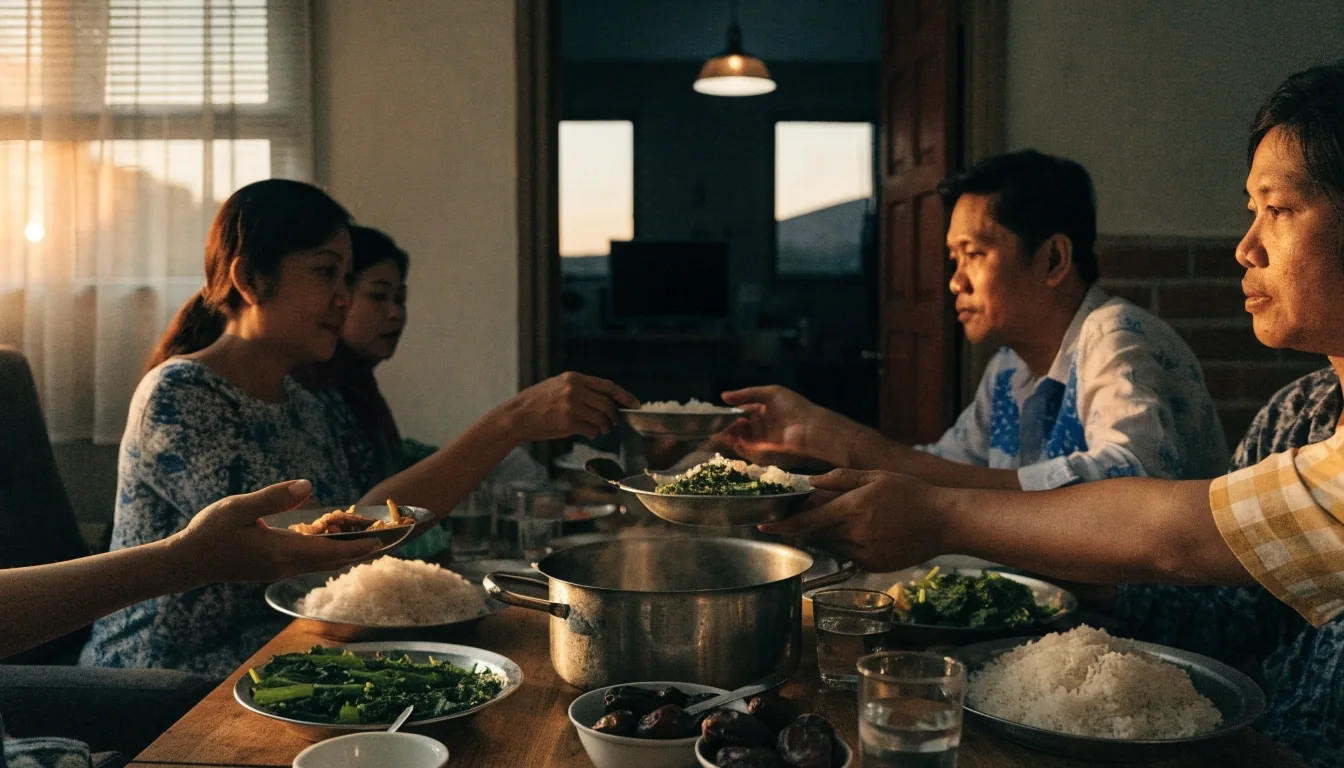
A shared family table at dusk with rice, vegetables, water and dates for an evening meal

Planning for Ramadan and family gatherings

Fasting months and holiday gatherings reshape the week, and a plan that ignores them fails. During Ramadan, meal timing and fluid distribution shift, and suhoor benefits from slower-digesting foods — rice, eggs, a little fa, and plenty of plain water rather than a very sweet drink.

At Lebaran, the goal is participation without a week of overcorrection afterward. Eat the rendang, take one serving, and return to your usual shape the next day. If sweets are everywhere for a week, name two moments you will actually enjoy instead of grazing the whole table.

Build these periods into the plan rather than pausing it. A guide that only works in an ordinary month is not a meal plan; it is a holiday you will quit.

Four days of example structure

Adjust portions to your goal and keep one flexible meal each week. Nothing here needs a special ingredient.

Swap fish for chicken, tempeh for tofu. The shape is what carries.

Monday

Rice, grilled fish, kangkung

Stir-fried water spinach with the fish, fruit in the afternoon. Keeps the protein lean and the greens quick.

Tuesday

Rice, tempeh and tofu, soup

Vegetable soup alongside, unsweetened tea instead of an iced drink. The cheapest protein day of the week.

Wednesday

Noodles with egg and vegetables

Fruit in the afternoon. Proof that a noodle lunch can hold its shape with egg and greens added.

Thursday

Rice, chicken, long beans

And a small portion of something you enjoy. Keeping one flexible meal each week is part of the plan, not a break from it.

Questions that come up often

Short answers to the things readers ask before they book a session or start a plan.

Do I have to give up rice?

No. Rice is the staple on most Indonesian plates and staying with it makes the plan easier to keep. What changes is the portion and what sits beside it — protein and vegetables at the same meal.

Can I build a meal plan for the whole family?

Yes, and it usually works better than cooking two different dinners. The shared dishes stay the same; portions and additions change per person. Ask about a family meal plan when you book and the dietitian will shape one around who eats at your table.

How personal is a plan from a dietitian?

A personalized plan starts from your meals, work hours, budget and any health context you share. That is why this page is written as a starting point, not a prescription: online sessions are where the amounts and timings get adjusted to you.

What should I bring to a first consultation?

A rough picture of a normal weekday: when you eat, what you drink, and where you usually buy lunch. Notes on any medication or health condition are helpful too. You do not need to prepare a formal record — a few honest lines are enough for the dietitian to work from.

Dietary guidance on this page is general information for healthy eating habits. It is not medical advice and does not replace care from a qualified professional who knows your history.

Take this guide to a dietitian and make it yours

Everything on this page is a starting shape. In an online nutrition consultation, a registered dietitian adjusts portions, timings and swaps to your body, your work hours and the food actually available near you.

Sessions run Monday to Friday, 09:00–18:00. You can reach the team at Jl. Malioboro No. 45, Yogyakarta, by phone on +62 274 589 321, or by email at [email protected].

If you are not ready to book, start with one change: protein at breakfast. Note how the rest of the morning feels for a week.